Press Release
PRESS RELEASE
Longevity Meets AI Draws More Than 100 to San Gabriel
Five sessions carried longevity science out of the laboratory and back to the dinner table
SAN GABRIEL, Calif. — On the afternoon of Saturday, September 5, 2026, Longevity Meets AI — From Science to Application was held in the San Francisco A and B rooms of the Hilton San Gabriel. Hosted by the Life & Health Committee of the North America Chinese University Alumni Alliance and co-hosted by Quality of Life Group and the Royal Medical Institute of Reverse Aging, the fully bilingual program ran simultaneously across four channels: in person, Zoom, live stream, and VooV for participants in China. Close to forty attended in the room and more than fifty joined by Zoom, bringing the two principal channels past one hundred participants.
This was the second event in the series. The first salon, on June 20, asked a question of place — whether to age in America or return to China. This event moved the question forward, and deeper:
"Can the way we age truly be changed — and if so, how do we bring that into our own lives?"
Five sessions moved in sequence from fundamental science to clinical practice, early detection, artificial intelligence, and finally to action a person can take the same evening.
From the Laboratory: A 2,000-Year Search, and Three Very Fast Years
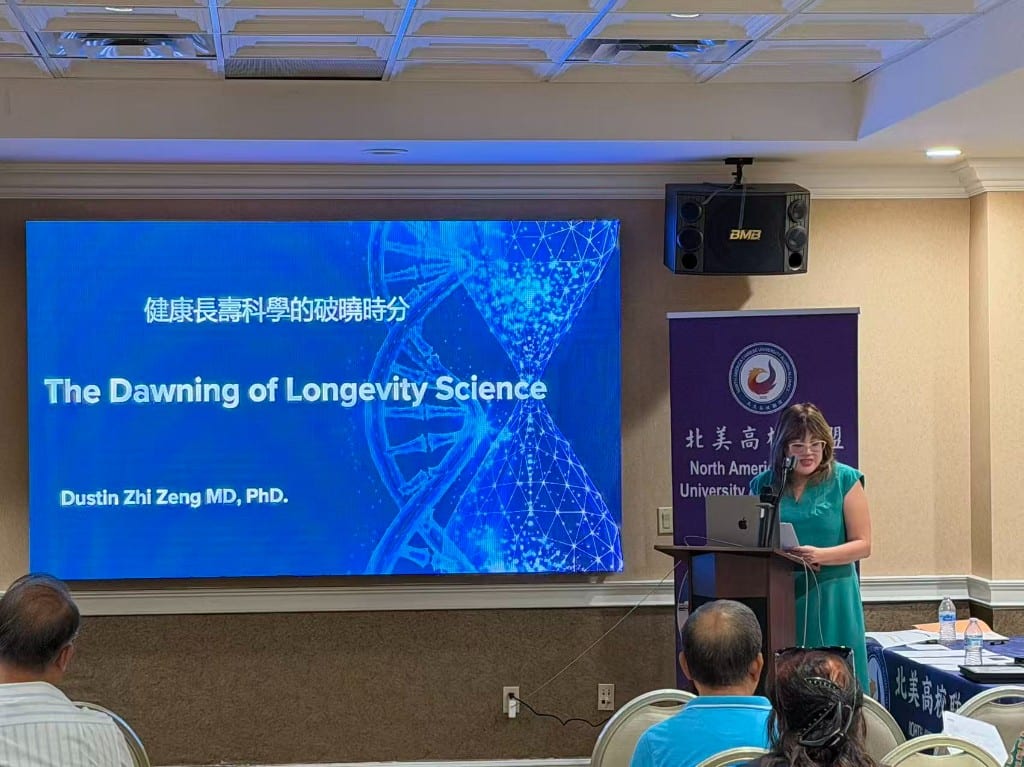
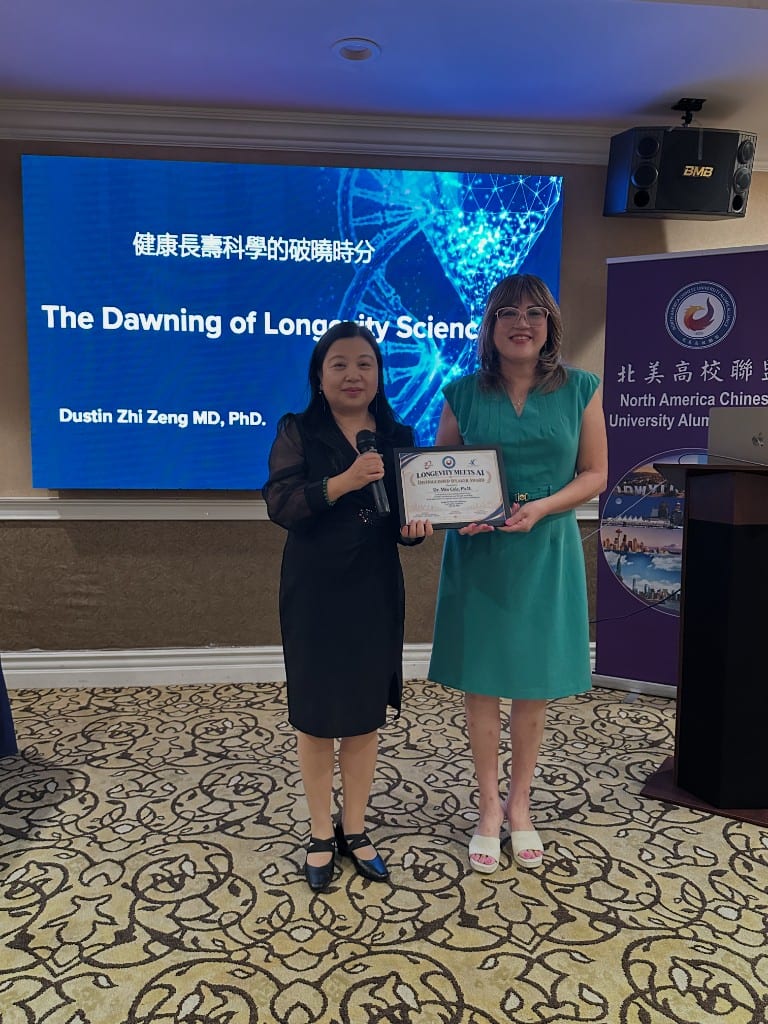
Dr. Dustin Zhi Zeng, M.D., Ph.D., opened with The Dawning of Longevity Science. A physician-scientist with dual credentials in medicine and molecular biology, Dr. Zeng is Director of the Royal Medical Institute of Reverse Aging.
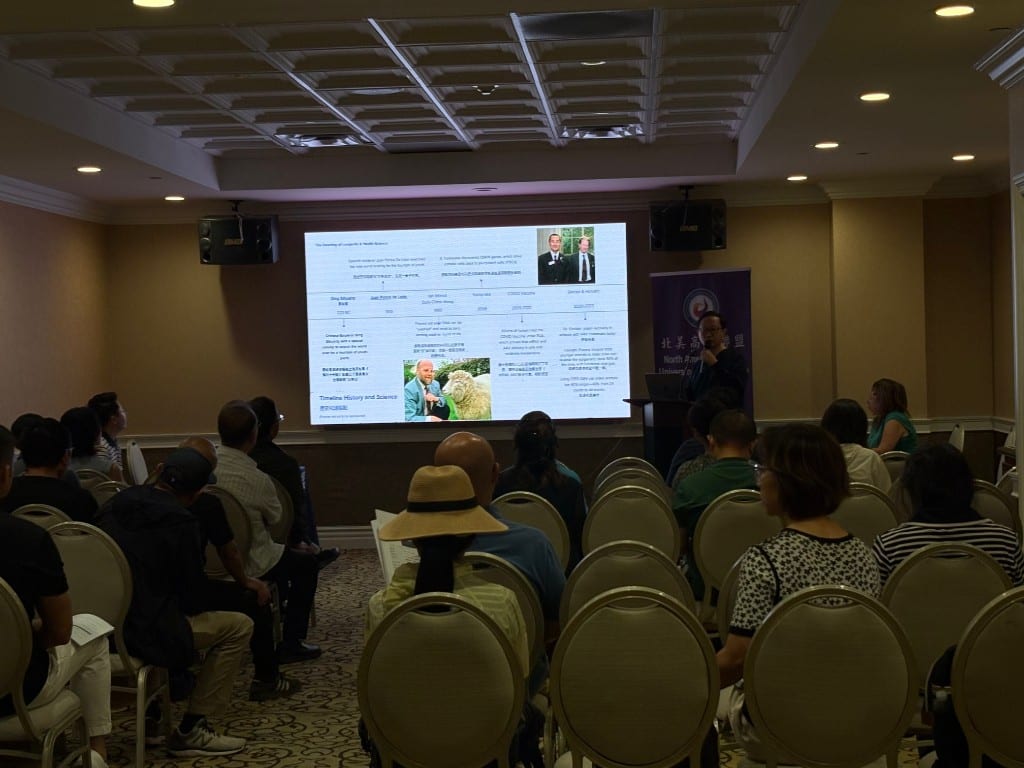
He began with a timeline: from 223 BC, when Emperor Qin Shi Huang sent an expedition in search of an elixir of youth, to Ponce de León's search for the fountain of youth in 1513; to Dolly the sheep in 1996, which proved adult DNA can be "washed" and reset to zero; to Yamanaka's 2006 discovery of the four OSKM genes that drive adult cells back to a pluripotent state; to billions of people receiving mRNA and AAV vaccines in 2020–2021, establishing the safety of those delivery platforms; to the epigenetic clock work of Sinclair and Horvath.
Biology, he emphasized, is now advancing at blistering speed. The Human Genome Project took thirteen years and $2.7 billion; Stanford has since demonstrated sequencing in five hours and two minutes at a cost of roughly $2,000. Determining a protein's three-dimensional structure was once a doctoral student's multi-year project; AlphaFold 3 does it in 0.6 minutes.
On application he reviewed gene therapy, young plasma components, stem cells and exosomes, small molecules and supplements, and hyperbaric oxygen — citing 2022 work by Horvath's group in which a young porcine plasma fraction reset the epigenetic clock of older mice by an average of 52%.
But he closed on what anyone in the room could do:
"Lifestyle changes can turn back our clock fifteen years." — Dr. Dustin Zhi Zeng
He cited Kara Fitzgerald's 2021 randomized trial: forty-two men, eight weeks of diet and lifestyle intervention, an average of 3.2 years younger as measured by DNA methylation age. He also covered caloric restriction and eating to roughly seventy percent fullness — a twenty-five-year University of Washington study found the restricted group lived 30% longer — intermittent fasting, the brain's overnight clearance during deep sleep, exercise, and stress reduction. And he noted the Harvard study begun in 1938 and now in its fourth generation of researchers, whose single strongest predictor of longevity is happiness and social fitness.
Into the Clinic: There Is No Single Intervention
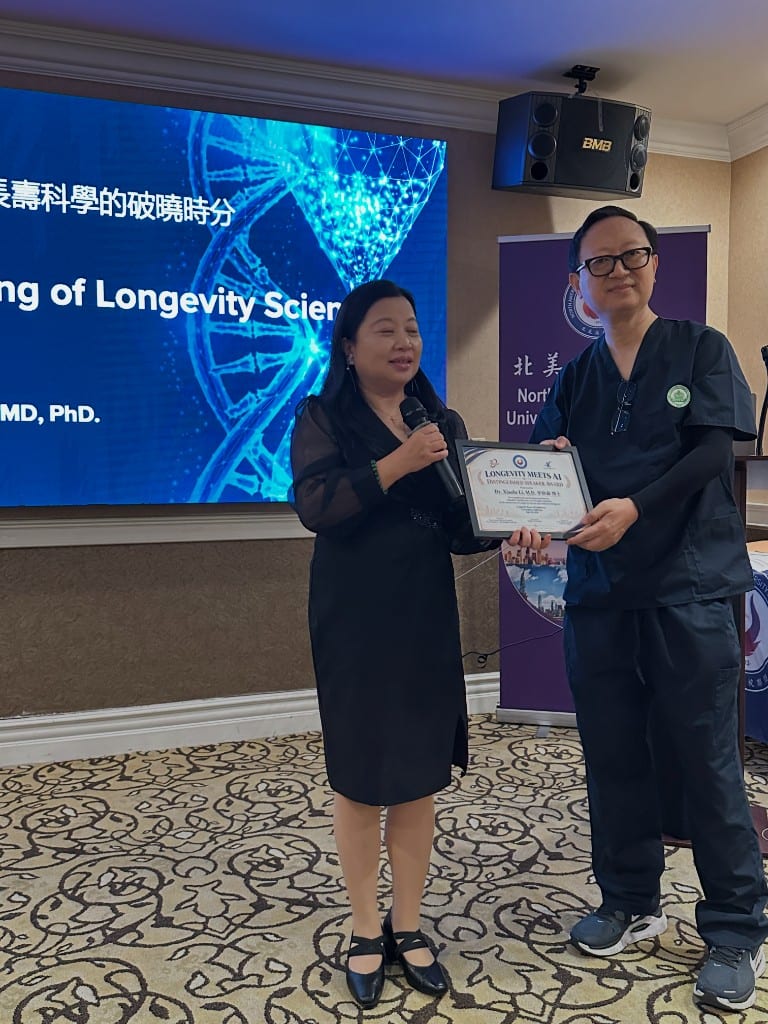
Dr. Xiaolu (Sherry) Li, M.D., FAARM, ABAARM, founder of the Precision Longevity Medicine Institute in Chicago, followed with Precision Longevity Medicine: Lifestyle, AI, and Hormone Optimization.
Her opening premise was direct: healthy longevity is not achieved by a single intervention. It requires evidence-based lifestyle medicine, artificial intelligence and precision hormone optimization together. She set out five pillars of healthy longevity — nutrition, exercise, sleep, stress resilience and precision hormone medicine — and reframed the goal: not simply to live longer, but to preserve function, prevent disease, maintain independence and extend healthspan.
"Food is information." — Dr. Xiaolu Li
On nutrition she gave specific targets: 1.6–1.8 g/kg of protein daily, up to 2.0 for older adults doing resistance training, and 30–35 g per meal; 30–50 g of fiber daily; and she introduced Akkermansia, a next-generation beneficial gut bacterium. On exercise: muscle is the organ of longevity, and "the goal is not simply to exercise more — the goal is to exercise smarter." On sleep: healthy sleep begins during the day. On stress: "resilient people are not stress-free — they recover well."
Her third section addressed precision hormone medicine — the timing and formulation of menopausal hormone therapy, its relationship to breast cancer, a re-examination of the WHI findings, and whether age sixty-five is genuinely a cutoff.
"Hormones do not work in isolation. Hormone therapy works best on a strong lifestyle foundation."
On artificial intelligence her position was equally clear. AI organizes data, integrates complex testing, recognizes patterns, improves workflow, supports clinical decisions and improves patient communication — "AI organizes the complexity. The physician provides the judgment."
Case Study: Cancer Screening Moves Earlier
In the afternoon case-study segment, Adity Khanna, MS, LCGC, Senior Medical Science Liaison at GRAIL, presented multi-cancer early detection and the Galleri test.
Approximately 600,000 people die of cancer each year in the United States, she noted, and roughly 87% of those deaths come from cancers not covered by recommended screening; Stage IV disease accounts for 58% of staged cancer deaths within five years. Galleri screens for multiple cancers from a single blood draw, with 51.5% sensitivity across all cancers and 76.3% in twelve deadly cancers that cause two-thirds of U.S. cancer deaths. In practice the data show a fourfold increase in screen-detected cancers, a 21% reduction in cancers found after symptoms appear, and a 25% reduction in diagnoses arriving through emergency care.
The technology has progressed from the discovery of circulating cancer signals in 2015 through the CCGA studies, PATHFINDER and the UK's NHS-Galleri trial to an FDA premarket approval submission in 2026. The Nancy Gardner Sewell Medicare MCED Screening Coverage Act, passed the same year, establishes a Medicare benefit category for FDA-approved MCED tests.
Artificial Intelligence: Seeing What Physicians Miss
The fourth session was delivered by Dr. Leslie Liu, Founder and CEO of Proximax AI. Dr. Liu holds a Ph.D. in Computer Science from USC, was formerly a researcher at IBM T.J. Watson, and served as a senior executive at JD.com Group and Lenovo.
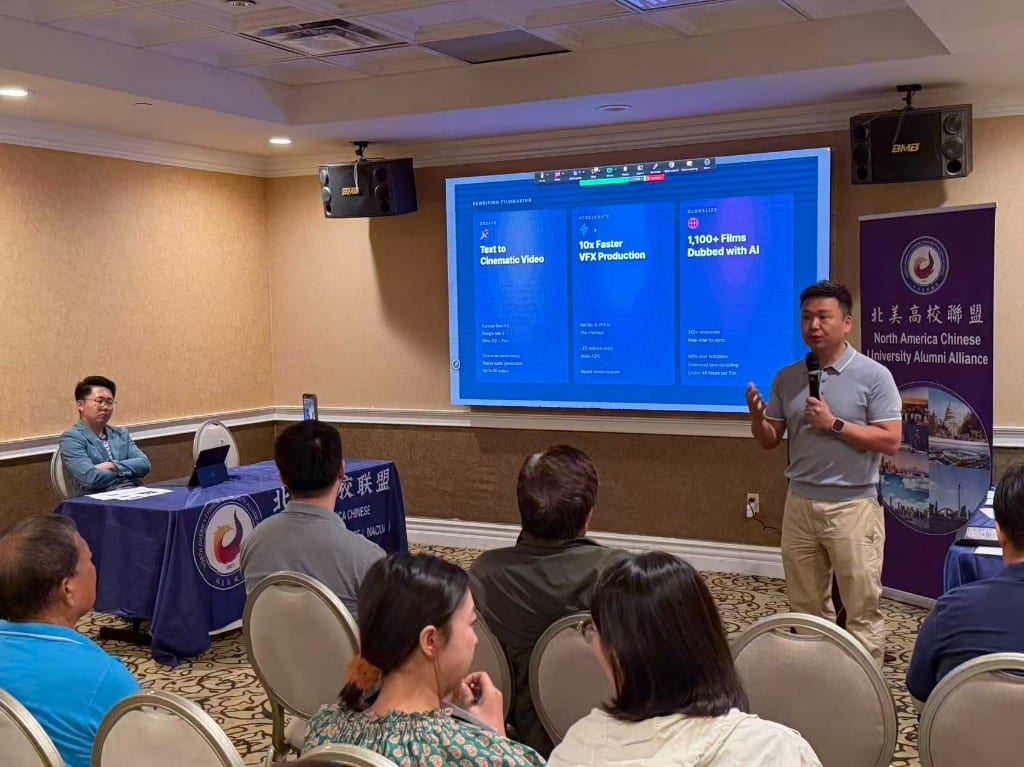
She sketched the current landscape — a global AI market of roughly $900 billion with 91% business adoption, ChatGPT reaching 100 million users in two months, and over $100 million to train a single frontier model — then turned to medicine. There are now 1,524 FDA-cleared AI algorithms in use, 76% of them in radiology; AI-assisted stroke detection is 44% faster and associated with 60% less disability, and fracture detection exceeds 90% in both sensitivity and specificity.
She was equally direct about the problems: hallucination, with lawyers already fined for filing briefs citing AI-fabricated cases; unresolved copyright and intellectual property disputes; and energy, with data center power consumption projected to double by 2030. She also noted that the EU AI Act — the world's first comprehensive risk-based AI law — came into force in August 2026.
She closed on Proximax AI, the company she is building to reshape feature filmmaking with frontier AI, with campuses in North Hollywood and South LA and a team drawn from IBM, JD.com, Lenovo, Sony Pictures and Emmy-winning production. Her four watchwords for the company: convergence, creation, disruption, and responsibility.
Back to Daily Life: Twenty Dimensions, and Three Sentences
The closing session was given by Dr. Min Cole, Ph.D., applied gerontologist, professor at the University of La Verne, and founder of Quality of Life Group: The Application — Living the Science of Longevity, Every Day. The speakers before her had answered the question from the science and the clinic; her task was the other half — where aging is actually changed.
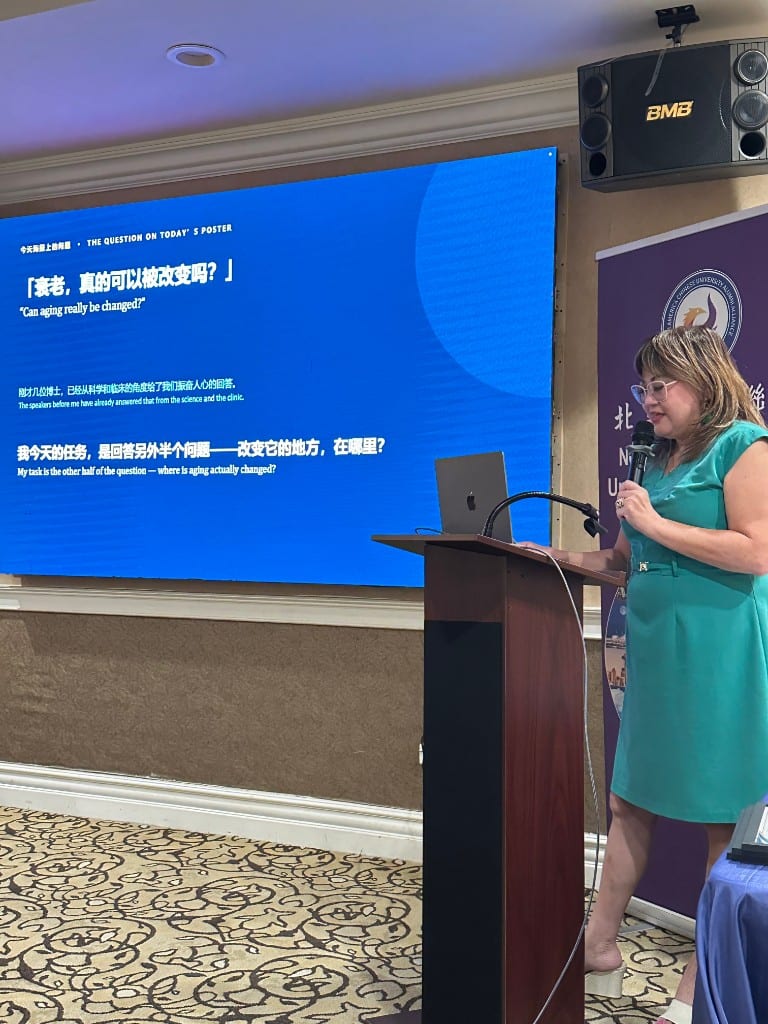
"Not in the laboratory. Not in the clinic. At your kitchen table. In the first hour after you wake. In every conversation with the people you love."
Research consistently attributes 20–30% of the outcome to genetics, she noted, and 70% or more to lifestyle, environment and daily choices — "this is the space of application, and where our real agency lives."
But knowing is not the same as doing. Eat vegetables, move, sleep well, worry less — everyone in the room already knew that. The problem, she argued, is that a goal too large gives you nothing to hold on to.
Her Strategic Longevity Planning Framework breaks the goal into twenty dimensions across five categories: the Body (health span, nutrition, sleep quality, functional independence); the Mind (brain span, lifelong learning, emotional regulation, resilience); Relationships (social connection, community support, life span, pleasure); Meaning (purpose, spiritual span, vocational value, lifestyle); and Environment (environmental support, wealth span, care span, digital capability).
She told the story of a reader from her book: a man in his seventies whose every lab value was normal and whose physician praised him — but whose hardest hour of the day was after dinner, alone, with nothing to do and no one to talk to. His Body dimension was excellent; Relationships and Meaning were nearly blank. So he did one small thing: three times a week, he taught calligraphy to young people at the community center. A year later he was a different man.
"What changed him was not a new drug. He widened his focus from one dimension to three."
The room then scored itself, one to ten in each of the five categories, and looked at its lowest. "You do not have to tell anyone — just remember it."
Her method follows in three sentences: make it small — too small to fail; attach it — hang the new habit on one that already exists; make it visible — check a calendar, keep a notebook, or let AI help you see. "AI is a personal steward at your side. It does not live your life for you — it lets you see how it is going, and nudges you when you are about to give up."
"Science gives us direction. The framework gives us the map. AI gives us the tools. But the road is still ours to walk, one step at a time."
She closed by asking every guest to take one thing home: one dimension, one action too small to fail, starting that night — and to score themselves again in three months. "Every step counts. Sixty is not too late. Seventy-five is not too late either."
A Question, Not a Sale
No product or treatment was sold at the event. The organizers set four principles at the planning stage: the science is real; from science to a plan; in our own context; and a question, not a sale.
The five sessions ran consecutively until nearly five o'clock, with participants remaining both in the room and online throughout. A third event in the series is in preparation, with the topic to be guided by the post-event participant survey.
About the Organizers
North America Chinese University Alumni Alliance — Life & Health Committee, host of the event, promotes exchange and education in life sciences and health across the North American Chinese community.
Quality of Life Group, founded by applied gerontologist Dr. Min Cole, is a California not-for-profit working in longevity education, care planning and community service under the motto Live Long, Age Well, and Thrive.
Royal Medical Institute of Reverse Aging is a research and clinical institute focused on reverse-aging and regenerative medicine.